Search This Blog

Showing posts with label father. Show all posts

Sunday, June 21, 2020

FATHER'S DAY WORSHIP - Bailey Tabernacle CME Church - 6/21/2020 (video)

HAPPY FATHER’S DAY!   Join us in praising the Lord and celebrating fatherhood in the online Bailey Tabernacle CME Church worship experience for June 21, 2020.  Engage. Share. Comment.  Rejoice in the Lord.

THANK YOU to all of you who continue to be faithful in supporting the ongoing ministry of Bailey Tabernacle CME Church.
Visit us at baileytabernaclecme.org  . You may use any the following options for tithes, offerings, and donations:
1)  From your computer or phone use the Givelify app or website for  BAILEY TABERNACLE CME    Click on or copy this link and paste it into your browser for Givelify:  https://giv.li/7xp90t
2)  From your computer or phone use Paypal.   PayPal.Me/BaileyTabernacleCME 
Click on or copy this link and paste it into your browser for Paypal  paypal.com/paypalme2/BaileyTabernacleCME
Or 3)  Mail your check or money order to:
Bailey Tabernacle CME Church
P.O. Box 3145
Tuscaloosa, AL 35403

-  Anderson T. Graves II, is a writer, community organizer, consultant and the pastor of Bailey Tabernacle CME Church 
Friend on Facebook at www.facebook.com/rev.a.t.graves
Follow on twitter @AndersonTGraves 

Click here to support this blog with a donation.  Or go to andersontgraves.blogspot.com and click on the DONATE button on the right-hand sidebar. 

Sunday, June 7, 2020

LEARNING TO LEAD. Bailey Tabernacle CME Church worship for June 7, 2020


-- Rev. Anderson T. Graves II is pastor of Bailey Tabernacle CME Church in Tuscaloosa, Alabama. 

Anderson T. Graves II   is a pastor, writer, community organizer, and consultant

Follow me on twitter @AndersonTGraves 

Click here to support this blog with a donation.  Or go to andersontgraves.blogspot.com and click on the DONATE button on the right-hand sidebar. 


THANK YOU to all of you who continue to be faithful in supporting the ongoing ministry of Bailey Tabernacle CME Church.

Visit us at baileytabernaclecme.org  . You may use any the following options for tithes, offerings, and donations:

1)  From your computer or phone use the Givelify app or website for  BAILEY TABERNACLE CME    Click on or copy this link and paste it into your browser for Givelify:  https://giv.li/7xp90t
2)  From your computer or phone use Paypal.   PayPal.Me/BaileyTabernacleCME 
Click on or copy this link and paste it into your browser for Paypal  paypal.com/paypalme2/BaileyTabernacleCME
Or 3)  Mail your check or money order to:
Bailey Tabernacle CME Church
P.O. Box 3145
Tuscaloosa, AL 35403


Monday, October 28, 2019

HEAVENLY MINDED, EARTHLY GREAT ( audio)

This message was originally delivered at Greater St. Paul CME Church in Akron, Alabama for their steward and stewardess day.  The title is: HEAVENLY MINDED, EARTHLY GREAT.


Listen well.

If you can’t get the audio on your device, visit the main podcast page at http://revandersongraves.podomatic.com/   

---Anderson T. Graves II   is a pastor, writer, community organizer, and consultant  

Rev. Anderson T. Graves II is pastor of Bailey Tabernacle CME Church in Tuscaloosa, Alabama. He writes the popular blog: A Word to the Wise at www.andersontgraves.blogspot.com

Follow me on twitter @AndersonTGraves 

Click here to support this blog with a donation.  Or go to andersontgraves.blogspot.com and click on the DONATE button on the right-hand sidebar. 


Support Bailey Tabernacle CME Church with a donation through Givelify
Givelify


Support by check or money order may be mailed to 
Bailey Tabernacle CME Church
1117 23rd Avenue
Tuscaloosa, Alabama 35401


Sunday, June 16, 2019

DADDY ISSUES: A Father's Day Message (audio)

The Father’s Day sermon is about: DADDY ISSUES.


Listen well.


If you can’t get the audio on your device, visit the main podcast page at http://revandersongraves.podomatic.com/   

 --Anderson T. Graves II   is a writer, community organizer and consultant for education, ministry, and rural leadership development.

Rev. Anderson T. Graves II is pastor of Bailey Tabernacle CME Church in Tuscaloosa, Alabama. He writes the popular blog: A Word to the Wise at www.andersontgraves.blogspot.com

Follow me on twitter @AndersonTGraves 

Click here to support this blog with a donation.   Or donate to Bailey Tabernacle with Givelify.
Givelify
Support by check or money order may be mailed to 
Bailey Tabernacle CME Church
1117 23rd Avenue
Tuscaloosa, Alabama 35401


Tuesday, January 22, 2019

GOD AND THE DAD-LECTURE (lessons from the end of Exodus 15)


Blogging  Exodus 15: 25-27

 25 So he cried out to the Lord, and the Lord showed him a tree. When he cast it into the waters, the waters were made sweet.
There He made a statute and an ordinance for them, and there He tested them, 26 and said, “If you diligently heed the voice of the Lord your God and do what is right in His sight, give ear to His commandments and keep all His statutes, I will put none of the diseases on you which I have brought on the Egyptians. For I am the Lord who heals you.”
27 Then they came to Elim, where there were twelve wells of water and seventy palm trees; so they camped there by the waters.


Upon reflection I realized that I when I give my children money it usually comes with a lecture.  Here’s the script:   Here’s $____ .  It’s yours.  Spend it how you want, BUT you know you need ____ and _____ is coming up; so you might wanna _____ first and make sure you ____.  Don’t go and _____ cause you won’t have anything left to _____ and when you can’t  _____ , don’t come running to me asking for another $_____ because you have money to handle your business, right?  O.K.

I can tell that gets on my kids nerves.  I don’t care.  But I can tell.

I bet God can tell, too; cause He does the same thing with His children.

In Exodus chapter 15, the Lord  performed a mighty miracle at the waters of Marah. He transformed the chemical composition of a poisoned spring and saved the escaped Hebrew slaves from death by thirst in the desert.  He gave them sweet water out of a bitter spring.

But before they left Marah, He also gave them a lecture.

. . . the waters were made sweet [, and there] He made a statute and an ordinance for them, and there He tested them (Exodus 15: 25).

A statute and/or ordinance is a rule, a codified restriction or requirement made part of the law.  We aren’t told what this law was, but we are told why this law was.  It was a test case. 


Before He gave them the Law, before even the 10 Commandments, God wanted to see if these people, this prenatal nation could handle living by God’s rules. 

The lecture I give my kids when I give them money is a test ---- and a plea.  I need to see if they will make responsible choices.  I WANT to see that they will make responsible choices because I want to give them more responsibility, more freedom, and more opportunities for (yes) money.  My lectures are the daddy way I beg them to please do the right thing here, kid, cause there’s more where this came from.   More lectures for sure, but also more blessings.

“If you diligently heed the voice of the Lord your God and do what is right in His sight, give ear to His commandments and keep all His statutes, I will put none of the diseases on you which I have brought on the Egyptians. For I am the Lord who heals you (Exodus 15:26).

The God of the Bible has a LOT of rules:  how you have to  treat people, who you should love, who you should forgive, how you should handle your money, who you can have sex with . . . a lot of rules.  But each of those rules is actually a plea.  Every “thou shalt” or “thou shalt not” is God saying “Please, please, please, my child.  Show Me that you can responsibly handle this part of the miracle that is your life because I want to bless you with more authority, more power, and more opportunity to grow and to succeed.”


After refreshing Israel at Marah’s one spring, God gave His people a statute and ordinance as a test.  They kept that test-case rule.  And so,  God brought them not to another single spring with a log next to it,  but Then they came to Elim, where there were TWELVE WELLS of water and SEVENTY PALM TREES; so they camped there by the waters.

If you ever feel like God is holding you back with warnings and slowing you down with lessons, take a breath.  It’s all right.  Your Heavenly Father isn’t trying to keep you from enjoying the present.    He is trying to position you for the greater blessings He has in store.

  
---Anderson T. Graves II   is a writer, community organizer and consultant for education, ministry, and rural leadership development.

Rev. Anderson T. Graves II is pastor of Bailey Tabernacle CME Church in Tuscaloosa, Alabama. He writes the popular blog: A Word to the Wise at www.andersontgraves.blogspot.com

Follow me on twitter @AndersonTGraves 

Click here to support this ministry with a donation.  Or go to andersontgraves.blogspot.com and click on the DONATE button on the right-hand sidebar. 
Visit the ministry’s website at baileytabernaclecme.org

Support by check or money order may be mailed to 
Bailey Tabernacle CME Church
1117 23rd Avenue
Tuscaloosa, Alabama 35401

I couldn't work this into the blog post, but #
Mrlegendarius 

Monday, June 18, 2018

FATHER, ABRAHAM


A Father's Day Follow-up Blog

Instead of audio from our Father's Day sermon, I'm sharing thought from the message in this unusually long post.  Enjoy.

Abraham was a father.  Abraham was all kinds of fathers, well 5 kinds. 

1.  Abraham was an uncle who was like a father.


Haran begot Lot. And Haran died before his father Terah in his native land, in Ur of the Chaldeans. . . Then Abram took Sarai his wife and Lot his brother’s son, and all their possessions that they had gathered, and the people whom they had acquired in Haran, and they departed to go to the land of Canaan (Genesis 11: 27, 28; 12:5).

After Lot’s dad and grandad died in the city for which Lot’s father was named (or the city named for Lot’s father),  Abraham took his nephew into his household.  When God called them  to complete the journey their father Terah had begun (Genesis 11:31), the patriarch brought his nephew along.

Abraham loved Lot.  He gave Lot herds and flocks and land out of what he gained in Egypt and Canaan.  When the young man and his staff started to chafe under Abraham’s rules and closeness, Abraham offered him first choice of the available pastures and his blessing.  When warring kings kidnapped Lot, Uncle Abraham immediately launched a rescue mission and in the aftermath of the mission, when the other kings tried to acquire Lot and his people as slaves, Abraham refused to sell them out even though it cost him his share of  the spoils of the battle (Genesis 14).    When Lot became an adult, Abraham referred to him as  his “brother” (Genesis 14:14), but he provided for and protected him as a father would a son.

When the Lord told Abraham of His plan to destroy Sodom, Gomorrah, and the other cities of the valley Abraham must have thought of his nephew living in Sodom because Uncle Abraham negotiated with God for the salvation of the wicked city.  Though there weren’t even 10 righteous men in all of Sodom, the faith of Lot’s uncle and surrogate father saved Lot and his family from dying with the sinful citizens of Sodom.

And it came to pass, when God destroyed the cities of the plain, that God remembered Abraham, and sent Lot out of the midst of the overthrow, when He overthrew the cities in which Lot had dwelt (Genesis 19:29).

A father is an agent of spiritual covering for his children.   When a man steps into the space left vacant by a father who died or walked away, that man, like Uncle Abraham, can administer spiritual covering to his surrogate children. 

You may never replace your nephew’s/ neice’s/ grandchild’s/ little cousin’s/ foster child’s biological father because losing a parent is a lot of pain to process.   Young adult Lot’s rebellion against Abraham might have reflected the lingering grief of and anger of a child whose father and mother “died on him” while he was still young.   Nevertheless the man who stands in the gap as a father figure can, like Uncle Abraham, cover their surrogate child in prayer with the same faith that covers their own biological children.

2.  Abraham was a mentor who was like a father. 

Eliezer worked for Abraham.  He became Abraham’s steward, his right-hand man, but Eliezer wasn’t just a trusted employee.  Eliezer was for all intents and purposes, a member of Abraham’s family.   No.  More than that.  

Before Abraham’s first biological child was born, Abraham had named Eliezer as his legal heir. 

But Abram said, “Lord God, what will You give me, seeing I go childless, and the heir of my house is Eliezer of Damascus?”  (Genesis 15:2)

Eliezer was like a son to Abraham. 

When you mentor youth in your community and young professionals in your industry, you have a chance to not only share knowledge but to pour out love.   When you mentor you can and should, like Mr. Abraham, see your proteges as heirs of your legacy.   

When Ishmael and Isaac were born, Abraham changed his will to direct the inheritance to his son; but Eliezer never lost his place of trust and significance in the house of Abraham.   Through all the drama that arose in the family, Eliezer remained loyal, and when the time came, it was (apparently) Eliezer whom God guided to the woman who would marry Isaac and become the literal mother of Israel (Genesis 24).

Abraham was over 147 years old when Eliezer brought Rebekah out of Syria and into Isaac’s arms.  It may be a long time before the young ones you mentor, teach, train, advocate for, and love are in  a position to help you.  It’s likely that you’ll never have to call on them for aid.  But, by mentoring a younger generation, you develop a pool of future leaders who can bless you and who will bless the world. 

3. Abraham let becoming an ex-husband make him an ex-father.


Because Sarah couldn’t get pregnant, Abraham took a 2nd wife, an employee named Hagar. 

 So Hagar bore Abram a son; and Abram named his son, whom Hagar bore, Ishmael  (Genesis 16: 15).

Abraham loved Ishmael.  He didn’t even want another son.  When the Lord appeared to remind Abraham that the promised descendants were still to come through Sarah, Abraham said to God, “Oh, that Ishmael might live before You!” (Genesis 16: 18)

But when Isaac was born, Sarah demanded that Abraham divorce Hagar and disown Ishmael.  Therefore she said to Abraham, “Cast out this bondwoman and her son; for the son of this bondwoman shall not be heir with my son, namely with Isaac” (Genesis 21:10).

Abraham didn’t want to lose Ishmael, but God allowed the breakup, promising to take care of Ishmael and make a nation of the son of the bondwoman, because he is your seed” (Genesis 21:11-13).   God’s response indicated that though Abraham’s and Hagar’s marriage needed to end,   Ishmael was still under God’s favor and, thus, Abraham and Ishmael could stay connected without threatening the covenant God would execute through Isaac.  

In other words, Abraham had to divorce his 2nd wife but not his eldest son.   But based on what’s in scripture, Ishmael didn’t see his father again until his funeral. 

Millenia later, the descendants of Ishmael founded a new religion and called it Islam.  Central to the Muslim faith is a narrative of the life of Father Abraham in which Ishmael is the promised child and  the Jews, as descendants of Isaac, are usurpers of Ishmael’s rightful place. 

Because Daddy Abraham let baby mama drama estrange him from his eldest son, Osama Bin Laden funded the 9/11 attacks.  Because Daddy Abraham allowed the break-up of his marriage to Hagar to be the breakdown of his role in his son’s life, the term “radical Islamist terrorist” is part of our common vocabulary. 

Sometimes, the dissolution of a marriage or relationship is so bitter that one  party keeps the child away from the other.  Sometimes that separation is warranted.  Most of the times I’ve seen, the separation isn’t. If you CAN’T see your child, neither God nor I fault you.

But if you just DON’T see your child ---- bro, you’re wrong.   You’re as wrong as Abraham.  Maybe more wrong because at least Abraham had a Divine guarantee that his son would be all right.   Ishmael lived 137 years and became the patriarch of 12 nations of his own (Genesis 25:13-18), but thousands of years later the pain of Dad’s abandonment still afflicts those of Ishmael’s blood.

As far as it is in your power, don’t let the differences between you and your ex prevent you from seeing, teaching, rearing, and loving the children you and they share.  It’s so much harder when you two aren’t together, but the extra effort may save the world a lot of trouble in the long run.

Every father has a legacy through his children.  That legacy may be good or evil.  Abraham’s legacy with Ishmael is negative.

But his legacy with Isaac is positive.   Not perfect, but positive.

4.  Abraham became a faith-full father.


When his relationship with Ishmael fell apart, Abraham focused all of his paternal affection on Isaac.  He loved Isaac like he was his only son (Genesis 22: 2).  Abraham loved Isaac so much that you had to wonder if he loved Isaac more than he loved God.  So, God devised an extreme test.  He told Abraham,“Take now your son, your only son Isaac, whom you love, and go to the land of Moriah, and offer him there as a burnt offering on one of the mountains of which I shall tell you” (Genesis 22:2).
Abraham obediently took his son to the sacred site, but before he and Isaac went up to the altar, Daddy Abraham told the rest of their party, “Stay here with the donkey; the lad and I will go yonder and worship, and we will come back to you” (Genesis 22:5).

Abraham’s whole heart was tied up in Isaac:  all of his hopes, all sense of purpose for his labors, and struggles, and losses resided in the life of the only son he had left.  But Abraham’s FAITH was tied up in God.  Abraham believed that the Lord had not brought Isaac this far to leave him.  Abraham believed that God would fulfill all the promises He’d made, and God had promised to make a great nation out of Isaac’s descendants.  Abraham believed that even if he gave his son to God, God would give him back.  This was Abraham’s legacy of faith. 

(Note:  If YOU take your child out to sacrifice them to God, you’re going to a highly secure  psychiatric hospital and your child is going into foster care.  In fact, if you believe you’re hearing God tell you to sacrifice your child, call the department of mental health and after you explain and give your address ask them to transfer you to DHR.)

As a father, Abraham failed in several spectacularly tragic ways.  But with Isaac, Abraham successfully combined a bottomless store of fatherly love with unerring faith in his God into
such a deep and immovable foundation that the family’s religious faith survived being surrounded by pagans and polytheists.  It survived famine and the betrayal of brothers.  It survived immersion in Egyptian culture and centuries of discrimination and slavery.  The faith bequeathed by Abraham survived wilderness and war and exile and the attempts at eradication by the greatest empires of man. 

Abraham’s love and faith were so genuine and absolute that after seriously intending to stab and burn Isaac on a sacrificial altar, father and son still had a strong relationship.  Think about how deep your father-son connection has to be to walk out of that incident together, continue living in the same camp, and trust your father to arrange your marriage.

LOVE and FAITH.

Love your children with all you have.  Be good to them.  Be good for them.  And trust God.  In thought, word, deed, and demeanor be the greatest example of faith in God that your children could ever experience.  Be a loving father full of faith so that no matter what happens to you or between you all, your children will KNOW beyond a shadow of any doubt that Daddy loves them and God is real.

But DON’T offer your kid as a human sacrifice.

But the Angel of the Lord called to him from heaven and said, “Abraham, Abraham!”
So he said, “Here I am.”
And He said, “Do not lay your hand on the lad, or do anything to him (Genesis 22:11-12).

5.  Abraham was a human father.  He failed, but he kept trying to do better.    


Abraham didn’t like being alone.  After Sarah died and Isaac started their own family, Abraham again took a wife, and her name was Keturah (Genesis 25:1). 

Yes, he was somewhere north of 147 years old at the time.  And yes, they had children: six boys (Genesis 25:2-4).

But the time Abraham’s and Keturah’s boys came of age, Isaac was established as the primary heir to Abraham’s lands and connections.  Abraham gave all that he had to Isaac (Genesis 25:5).  But, old Daddy Abraham didn’t make the same mistake he’d made with Ishmael.   He didn’t leave them with nothing.  He gave them enough wealth to set themselves up out of town.   Abraham gave gifts to the sons of the concubines which Abraham had; and while he was still living he sent them eastward, away from Isaac his son, to the country of the east (Genesis 25:6).    Abraham tried to balance the favor/ favoritism toward Isaac with fatherly love and fairness to his youngest children. 

One of Abraham’s and Keturah’s sons founded the Midianite nation.  The Midianites eventually fell into general idolatry and tried to spiritually sabotage Israel in the wilderness (Numbers 25).  However, some of the children of Midian remembered the faith that Father Abraham had taught them.  One of them was a shepherd-priest named Jethro, or Reuel. 

Jethro did for Moses what Abraham had done for Eliezer and Lot.  (Exodus 2; 4; 18).     Jethro took Moses in, mentored him in the faith of Abraham and the ways of a good shepherd.  He made Moses part of his family (Exodus 2:15), supported Moses in his calling (Exodus 4:18), celebrated Moses’ success and with his wife and children, and shared wise advice (Exodus 18).

Through 500-plus years, Abraham’s faith endured among the descendants of his 3rd wife.  Even Ishmael’s descendants, after centuries of apostasy, remembered Abraham and returned, in Islam, to reverence for the Old Testament. 

Abraham was a great and imperfect man, a human and, therefore, flawed father.  But he tried and kept trying.  It paid off.

Eliezer did well.  Ishmael did well. Isaac did well.  Midian did well.  Even after the craziness that happened to Lot after Sodom (Genesis 19:30-38), his descendants Ruth (book of Ruth) and Naamah (1 Kings 14:21) joined the royal and messianic lineage of Abraham. 

HOPE, FAITH, LOVE.

No matter what kinds of father you are, you will be an imperfect one.   Recognize your failures but never stop trying to do better.

Love your children and your adopted children and your community proteges and your children by your ex and your children by your baby’s mother and your stepkids and your other kids.  However you are made their father, love them.   Love them and trust God.  

Believe that the Lord has power, grace, and favor enough for all your sons and daughters.  

Teach your children to believe.  Fill all of them with a sense of hope, with the knowledge that no matter how their family is built or broken, God has a plan for them, a plan for good and not for evil, to give them a future and a hope.


--Anderson T. Graves II   is a writer, community organizer and consultant for education, ministry, and rural leadership development.

Rev. Anderson T. Graves II is pastor of Miles Chapel CME Church in Fairfield, Alabama. He writes a blog called A Word to the Wise at www.andersontgraves.blogspot.com

Email atgravestwo2@aol.com
Follow me on twitter @AndersonTGraves 

Click here to support this ministry with a donation.  Or go to andersontgraves.blogspot.com and click on the DONATE button on the right-hand sidebar.

Support by check or money order may be mailed to 
Miles Chapel CME Church
P O Box 132
Fairfield, Al 35064

Saturday, April 28, 2018

DADDY ISSUES, a lesson from Moses' childhood


blogging Exodus 2

Moses was born into the tribe of Levi, the clan that would become the hereditary priesthood of Israel; but when Moses was born, the Levites weren’t priests.  They were the minor clan descended from a disgraced ancestor (Genesis 49:5-7) among a community of slaves.  Moses and his siblings were spiritually anointed.  The eldest, Miriam, became a prophetess; Aaron, the middle child, became the first high priest of Israel; and Moses, the baby, was . . . well, Moses! 

But family life wasn’t all prayer meetings and praise services. 

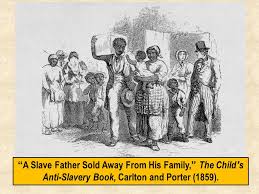
First, they were all slaves.  And,  on top of that, Daddy was basically an absentee father. 

Moses’ MOTHER hid him from Pharaoh’s death squads.  Moses’ SISTER followed the basket floating down the Nile.  They arranged to keep Moses until he was weaned.   But Daddy?  Amram, Moses’ father, didn’t fight Pharaoh’s guards when they came to investigate reports of an infant birth.  He didn’t help hide the baby.  From the information in Scripture, Amram didn’t do anything.


Maybe he was emotionally disconnected.  Maybe he was worked so hard by his Egyptian overseers that he couldn’t participate in home life.  And maybe slavery broke him.  Maybe they so completely whipped away his hope that he couldn’t even find inspiration in the lives of his children. 

Does this sound familiar?


Don’t believe the lie that broken families is something new to to our times or unique to our ethnicity.

The Bible reports that enslavement and ethnic oppression are designed to breaks men.     When the spirits of the men are broken, women HAVE to step up.  Matriarchy isn’t a new  or progressive paradigm for the family.  Matriarchy is basic survival for oppressed peoples.  


Despite all of this, Miriam, Aaron, and Moses became the leaders of a movement that emancipated a nation of slaves and composed the foundational texts of the Gospel.  Moses’ story proves that the children of brokenness don’t have to become the parents of brokenness. 

To overcome the brokenness you inherited, you have to acknowledge your parents’ sins as sins.     
Exodus 6: 20 states that Moses’ father and mother were nephew and auntie.  
Now Amram took for himself Jochebed, his father’s sister, as wife; and she bore him Aaron and Moses. And the years of the life of Amram were one hundred and thirty-seven (Exodus 6:20).

Up to this point in the Old Testament, marrying such close relatives was uncommon.  Jacob and Isaac married cousins.   Abraham and Sarah were half-brother and sister. 

Yeah, I know.  Eww.

At one point, while dictating the Law to the children of Israel in the wilderness, Moses the great prophet said: 
 The nakedness of your sister, the daughter of your father, or the daughter of your mother, whether born at home or elsewhere, their nakedness you shall not uncover. . .   You shall not uncover the nakedness of your father’s sister; she is near of kin to your father. You shall not uncover the nakedness of your mother’s sister, for she is near of kin to your mother (Leviticus 18:9, 12-13).

That's a euphemistic way of saying:  God doesn’t want men  hooking up with their aunties. 

Moses looked at his family, listened to God, and said to his people:  God made my sister, and my brother, and me in His image.  He protected us, filled us with His anointing, and called us to leadership.  We are not mistakes.  But the way our parents got together, the structure of their relationship?  That wasn’t right.   The founders of our nation did great things and were mightily blessed.  But the structure of their relationship?   That was sinful. 

Good things came from it.  Great people came from it, but that doesn’t make it right.     

God freed Israel from slavery and said to them, “Now that you’re free be better than your ancestors were.”

This was a hard truth for Moses to speak.  A hard truth for me to speak.  You see, my daddy didn’t always do right, but the Lord says that my siblings and I are not mistakes.  He loves us.  He blessed us.  He brought us thus far along the way, but He does  want us perpetuate the same dysfunction in which our forefathers lived.

It’s a difficult thing:  to confess that you, your family, or maybe even your entire nation was conceived in sin and shaped in iniquity. 

Difficult but necessary. 

Moses’ story shows us that generational greatness requires us to learn our my fathers’ sins, not repeat our fathers’ sins.  We need to stop encouraging our children in lifestyles that political pharaoh and spiritual pharaoh designed to break our people. 

We celebrate survivors.  We honor the  strength of our sisters who did what had to be done when their man wouldn’t.  We glory in the beauty and potential of our children, regardless how they became our children.  And we teach our children the truth so they and all our descendants can walk into their best lives because of the kinds of families they built not despite the kinds of families they built.    


--Anderson T. Graves II   is a writer, community organizer and consultant for education, ministry, and rural leadership development.

Rev. Anderson T. Graves II is pastor of Miles Chapel CME Church in Fairfield, Alabama. He writes a blog called A Word to the Wise at www.andersontgraves.blogspot.com

Email atgravestwo2@aol.com
Follow me on twitter @AndersonTGraves 

Click here to support this ministry with a donation.  Or go to andersontgraves.blogspot.com and click on the DONATE button on the right-hand sidebar.

Support by check or money order may be mailed to 
Miles Chapel CME Church
P O Box 132
Fairfield, Al 35064